By Walter Coraza Morveli
In Andean and Inca philosophy, life is guided by the chakana, a sacred symbol and a path that teaches how to live in harmony and balance with the entire cosmos. The chakana serves as a map and a spiritual guide for Andean peoples, who maintain constant interaction with different dimensions of existence through rituals, offerings, and shamanic practices.
What Is the Chakana?
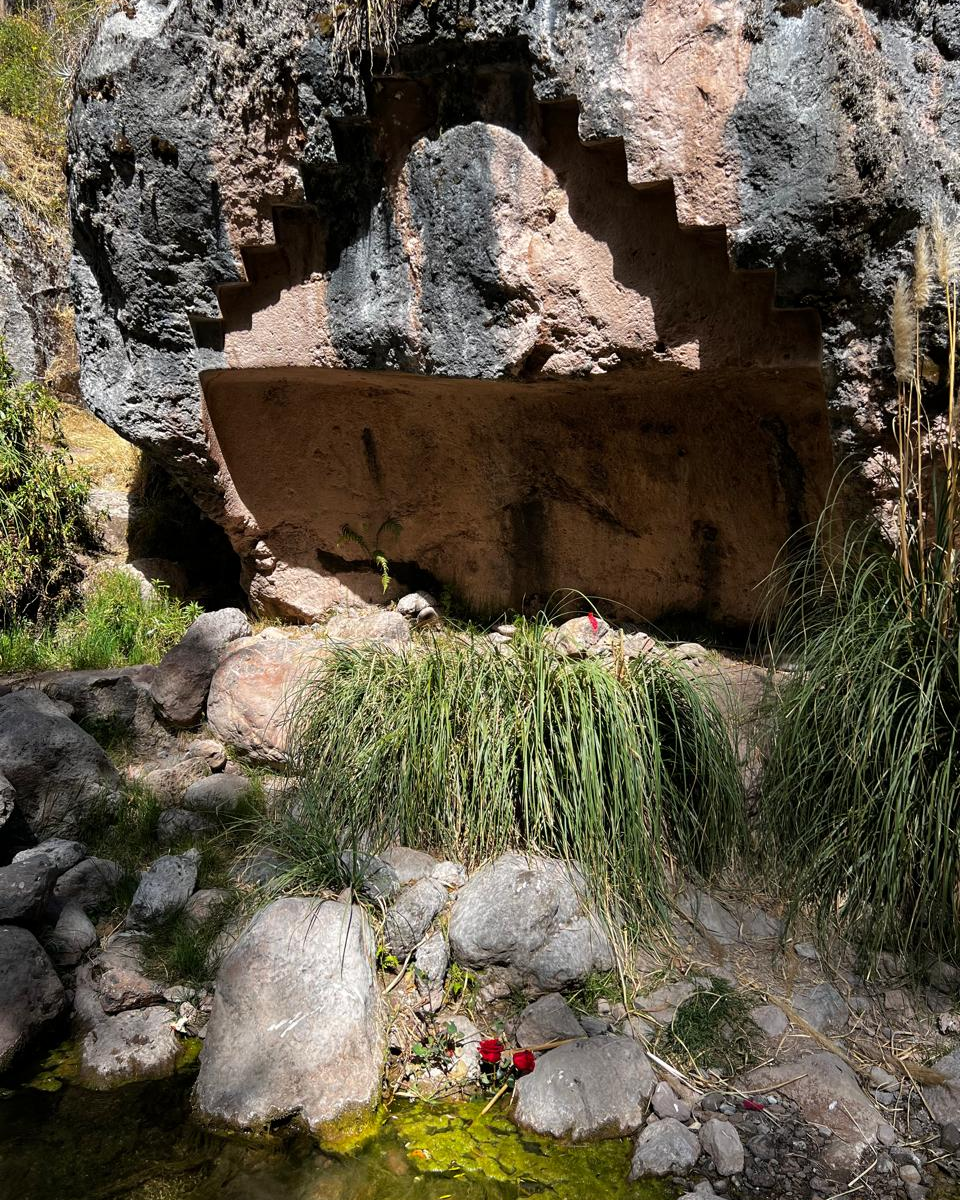
The chakana is an important and sacred symbol of Andean culture. Interpreted as The Andean path of living, It is the sacred bridge that allows the Andean people keep interconnected with the cosmos. It is also known as the Andean Cross and is associated with a constellation in the Southern Hemisphere known as the Southern Cross. Considered the core of Andean and Inca cosmology, the chakana expresses a profound understanding of
the universe and its laws. This is a millenary symbol that appears in all Andean native cultures and ethnic groups and is found in Inca constructions as well as in civilizations even older than the Inca, such as
Tiahuanaco. These cultures used the chakana as an astronomical, mathematical, social,
religious and political instrument.
A Cosmological Calendar
For the Andean ancestors and grandfathers, the chakana worked as a guide that communicated the rotation of the Earth. It indicated the right times for sowing and harvesting, predicted rain, frost, hail, and snow, and functioned as an agricultural calendar.
Through movement of the sun and the earth, the Andean solstices and equinoxes, the native Andean people could interpret periods of sunlight, seasons, and cosmic cycles. Besides being a calendar, the chakana is also a geometric and mathematical symbol that brings order to Andean beliefs and thought.
Origin of the Word Chakana
In the Quechua language:
• Chaka = bridge
• Ana/ Hana = upper world
Therefore, Chakana means “the bridge to the upper world” or “bridge of connection between dimensions.”
A Philosophy and Path of Life
In Andean tradition, the chakana represents the “path of human life”. Through it, the Andean person understands how to live conscious, harmony and balance in connection with nature. Having a relationship with Mother Earth (Pachamama), the sacred mountains (Apus), and sacred being, animal and spirits, it is expressed through offerings, ceremonies, and rituals practicing love, respect and reciprocity. These practices connect humans with the
three worlds:
• Hanan Pacha – the upper world, the divine realm.
• Kay Pacha – The middle world where we live.
• Ukhu Pacha – The inner or lower world.
The three dimensional worlds are also represented by three sacred animals that have a special and deep meaning in every dimension, for example the upper world is represented by the condor, the middle world is represented by the puma and the under world is represented by the serpent, Thus, the chakana acts as a bridge between dimensions.
Symbolic Meaning
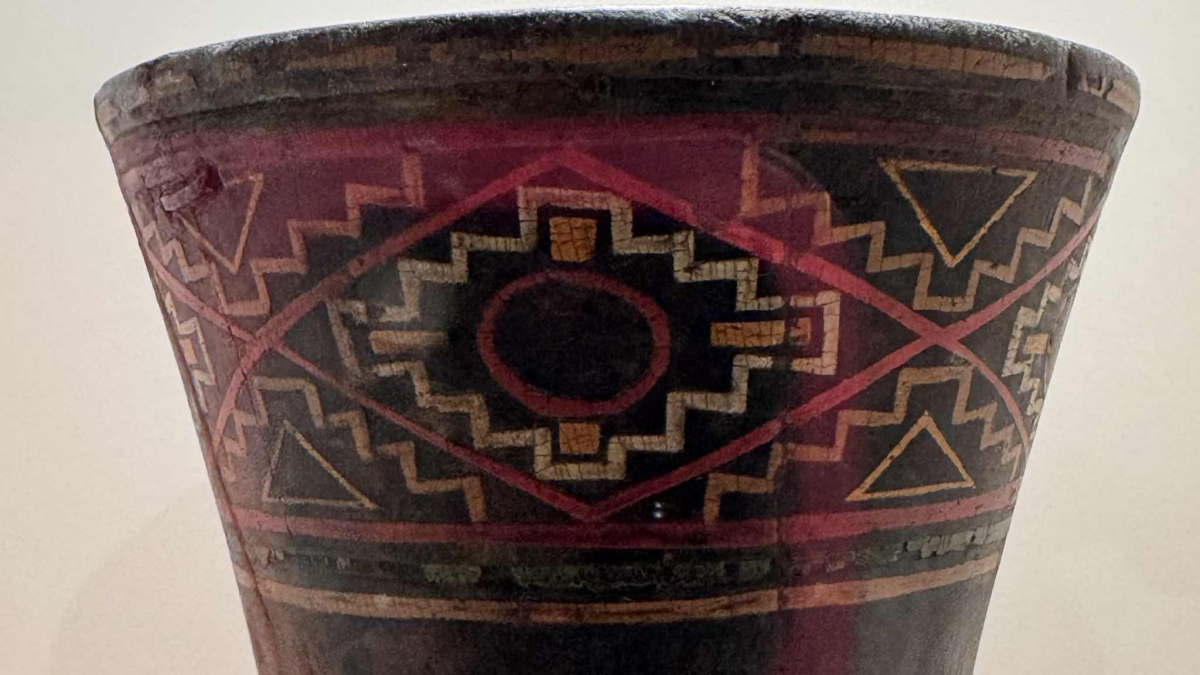
The chakana represents vitality, harmony, and duality. It shows the path toward living in balance with all beings, Astros, and It is ruled by the main creator of the cosmos Illa Teqse Wiracocha Pacha Yachachi. The Number 2, The symbol is divided into two sides represented by the left side and right side, In Quechua lloque Lado and Paña Lado, yanantin masintin, the duality of everything, feminine and masculine, It is also divided into three levels representing the three pachas (worlds), and also expresses concepts of mathematics, religion, philosophy, and social order. Its geometry is used as a model for organizing thought.
The number four is also present everywhere: the four directions, four winds, four lights, four seasons, and four elements. The Incas were inspired by the chakana to build the Inca empire. They builded the four regions of the Inca empire and the center is Cusco or QOSQO exactly located in the Temple of the sun Qoricancha. Cusco also was build in the shape of a Puma representing the middle wolrd. The Inca Empire itself the Tawantinsuyo was divided into four regions: Coyasuyo, Antisuyo, Chinchaysuyo, and Contisuyo.
The number 12 , the twelve points of the Chakana represent the Andean understanding of balance between nature, time, and the cosmos. Their most widely accepted meaning is the twelve months of the annual cycle, reflecting the deep connection between Andean cultures and the rhythms of the natural world. At the same time, the twelve points also symbolize the forces that maintain universal harmony, the stages of human growth, and the interaction of
the three Andean worlds with the four directions. Together, these interpretations show that the Chakana is not just a symbol, but a map of life, nature, and the interconnected structure of the universe.
The number 9, In the Chakana, In Andean belief, the number nine symbolizes transformation and the deeper structure of the cosmos, divided into three worlds, Hanan Pacha, Kay Pacha, and Ukhu Pacha each with three levels. These nine levels represent human and spiritual development, cycles of change, and inner, earthly, and cosmic growth. Linked to the Pachakuti, the name means “the one who transforms the earth,” the number nine in the Chakana embodies renewal, evolution, and the transformative rhythms of existence.
The Spiral, the Center of the Chakana The spiral represents origin, principle, and end, the cycle of life itself. For the Andean person, life unfolds as a spiral that returns to its source, the T’eqsi Muyu, the cosmic center (Qosqo).
The Chakana as a Person
For the Andean people, a human being is considered a Chakana; we are a cosmos. The body is divided into three dimensions: the head represents the upper world, the area from the neck to the hips is the middle world, and from the hips to the feet is the lower world. The body is also divided into two sides: left and right, representing the feminine and masculine. The center, the Qosqo (the navel), It represents the core or belly button, the point of balance and connection.
Fundamental Andean Principles Values
• Munay – The unconditional Love
• Yachay – The wisdom and knowledge
• Llankay – The work and service
Communal Practices
• Ayni – Sacred reciprocity
• Minka – Collective work for the community
• Mita – Shared responsibility and labor
These principles reflect the ethical foundation of the chakana.
A Bridge to Consciousness
The Chakana acts as a bridge to celestial wisdom, a path of learning that keeps humans connected to the visible and invisible worlds. It maintains a profound relationship with both the human being and the spiritual realm.
The philosophy of the Chakana is an ancestral inheritance left by our Andean ancestors. It invites us to continue exploring, deepening, and practicing its teachings. By following this guide, we learn to live in balance, interconnected with all dimensions of existence, weaving paths of knowledge and harmony with ourselves, the universe, and the cosmos.
Here in PeruShamans we have a special rite to connect with this ancestral knowledge you can ask for our Chakana Rite a transmission to connect with this ancient knowledge.
Reference
: https://www.alquimiaabdominal.cl/wp-alquiminal/uploads/2015/12/La_Chakana.pdf
https://www.facebook.com/CCEAYAWARWAYNA/posts/qu%C3%A9-significa-la-chacana-
o-cruz-del-surquiz%C3%A1s-alguna-vez-viste-la-cruz-del-sur-o/1614348212837575/